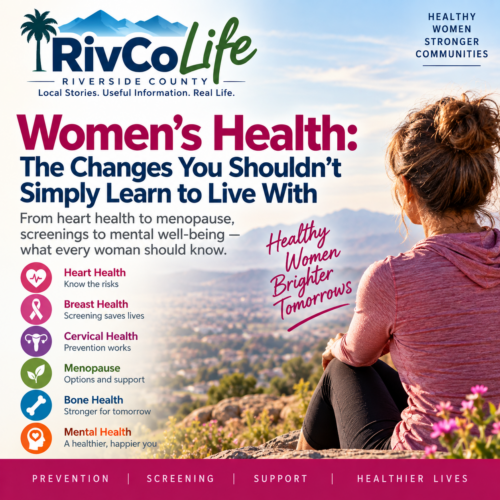
Women become remarkably good at putting other people first.
Children need something. A spouse needs something. Parents get older. Work needs attention. There’s dinner to make, appointments to remember and a seemingly endless list of things that need to happen before taking care of yourself makes it anywhere near the top.
Meanwhile, your body changes.
Some changes are perfectly normal. Others deserve attention.
Knowing the difference can matter.
Your Heart Deserves More Attention Than You May Think
Ask someone to name a major health threat facing women and breast cancer will probably be near the top of the list.
It should be taken seriously.
But so should heart disease.
Heart disease is the leading cause of death among women in the United States. Yet women don’t always experience heart trouble exactly the way people expect.
Chest pain or discomfort remains an important heart-attack symptom in women. But women can also experience shortness of breath, nausea or vomiting, pain in the back, neck, jaw or arm, unusual fatigue, dizziness or weakness.
If you think you may be experiencing a heart attack, don’t wait to see whether it goes away. Call 911.
Knowing your blood pressure, cholesterol, blood sugar and family history can also help you and your healthcare professional understand your cardiovascular risk before an emergency occurs.
Know Your Breasts—But Don’t Depend on Yourself Alone
Breast cancer screening has changed considerably over the years, and recommendations aren’t identical for every woman.
Age, family history, genetic factors, previous breast findings and other circumstances can affect when screening should begin and how frequently it should occur.
That’s why mammography should be a conversation with your healthcare provider rather than something you simply put off indefinitely.
Women should also be familiar with how their breasts normally look and feel.
A new lump deserves attention, but a lump isn’t the only possible sign of breast cancer. Changes in breast size or shape, skin dimpling, nipple changes or unusual discharge can also warrant medical evaluation.
Most breast changes are not cancer.
But you can’t determine that by worrying about it at home.
Don’t Forget Cervical Health
Cervical cancer provides one of modern medicine’s strongest examples of the value of prevention and screening.
Persistent infection with certain types of human papillomavirus—HPV—is responsible for most cervical cancers.
HPV vaccination can prevent infections with types of HPV responsible for many cancers, while cervical screening can detect precancerous changes before they develop into invasive cancer.
Depending on a woman’s age and circumstances, screening may involve an HPV test, a Pap test or both.
And screening isn’t only for women who are currently sexually active.
Talk with your healthcare professional about the screening schedule appropriate for you rather than assuming you no longer need it.
Menopause Is Normal. Suffering in Silence Isn’t Required.
Menopause is a natural stage of life, not a disease.
That doesn’t mean its symptoms are imaginary or something women should simply endure.
Hot flashes and night sweats receive most of the attention, but the transition can also involve sleep problems, vaginal dryness, changes in sexual comfort, mood changes and other symptoms.
Some women barely notice the transition.
Others find that it significantly disrupts their lives.
There are treatment options.
Hormone therapy may be appropriate for some women and inappropriate for others depending on age, medical history and individual risk factors. Nonhormonal treatments are also available for certain symptoms.
The important point is simple: “It’s menopause” doesn’t have to mean “there’s nothing we can do.”
Talk about it.
Your Bones Are Changing Too
Bone health is easy to ignore because osteoporosis usually doesn’t announce itself with pain while it’s developing.
For some women, the first obvious sign is a fracture.
Women are particularly vulnerable to bone loss after menopause as estrogen levels decline.
Weight-bearing exercise, resistance training, adequate nutrition, avoiding smoking and limiting excessive alcohol consumption can help support bone health. Depending on age and individual risk, a healthcare professional may also recommend bone-density screening.
Falls matter too, particularly as we get older.
Protecting bones isn’t only about bone density. Vision, medications, balance, muscle strength and hazards around the home can all affect the likelihood of a serious fall.
Pay Attention to Bleeding That Isn’t Normal for You
Abnormal vaginal bleeding has many possible causes, most of which aren’t cancer.
But unexplained bleeding shouldn’t automatically be dismissed.
Very heavy periods, bleeding between periods, bleeding after sex or other significant changes deserve discussion with a healthcare professional.
And bleeding after menopause should be medically evaluated.
Again, that doesn’t mean cancer is the likely explanation.
It means the cause needs to be determined.
Mental Health Is Health
Women don’t have separate bodies and minds.
Chronic stress, anxiety, depression, caregiving responsibilities, relationship difficulties, financial problems, hormonal changes, grief and loneliness can all affect physical as well as emotional health.
Persistent sadness, hopelessness, overwhelming anxiety, loss of interest in activities you normally enjoy, major changes in sleep or appetite, or difficulty functioning shouldn’t be dismissed as weakness or something you simply need to “snap out of.”
Mental health conditions are health conditions.
They deserve care.
Sexual Health Doesn’t Expire at 40, 50 or 60
Sexual health is another subject many women—and sometimes their healthcare providers—avoid discussing.
Pain during sex, vaginal dryness, changes in desire, difficulty reaching orgasm, urinary leakage and other concerns are common, particularly as hormones and bodies change.
Common doesn’t mean you have to live with them.
Some problems have straightforward treatments. Others may involve medications, hormonal changes, pelvic-floor issues, relationship factors or underlying medical conditions.
A good healthcare provider has heard these questions before.
You don’t need to be embarrassed to ask them.
Make the Appointment
Perhaps the most important women’s-health advice isn’t complicated.
Don’t continually put yourself last.
Schedule the mammogram.
Ask whether you’re due for cervical-cancer screening.
Know your blood pressure.
Discuss that strange symptom you’ve been ignoring.
Ask about menopause.
Talk about your mental health.
Find out whether you need bone-density screening.
And if something in your body changes and continues to concern you, don’t convince yourself you’re wasting the doctor’s time.
You know your body better than anyone else knows it.
Pay attention when it tells you something has changed.
Taking care of yourself isn’t selfish.
There are probably quite a few people in your life who would prefer to have you around for a very long time.
This article provides general health information and is not a substitute for professional medical advice, diagnosis or treatment. Screening recommendations and individual health needs vary. Talk with a qualified healthcare professional about your personal risk factors, symptoms and appropriate preventive care.
RivCo Life
Local Stories. Useful Information. Real Life.